Based on an interview with Dr HDR Vincent Jannin, Director of R&D and Head of Innovaform® Accelerator at Lonza Capsugel.
Why it’s time to re-think drug delivery - and how Lonza Capsugel is unlocking a future of possibilities with enteric delivery
Throughout the past decades, several transformative moments have shaped the development of modern medicines, an instrumental aspect of which remains the drug delivery technology that determines how drugs are able to reach, and affect, their targets.1 Starting in the 1950s, sustained-release technology was succeeded by a plethora of small molecule delivery systems, up until the introduction of the first PEGylated protein, Adagen®, in 1990.1–4 The possibilities continued to expand, with PEGylation technology entering the public spotlight in the 2020s thanks to its role in enabling the timely development of lipid nanoparticle formulations for COVID-19 vaccines.1,5
Together with advances in the way drugs can be delivered within the body, so too has pharmaceutical research yielded striking developments, including the biologics that entered the armamentarium at the end of the 20th century to transform outcomes of various previously “untreatable” diseases.6–8 Today, biologics retain a prominent place in medicine, representing five of the ten best-selling pharmaceutical therapeutics in 2023 and accounting for over half of the drugs with “blockbuster” status (sales exceeding $1 billion) in the same year.7–9
However, despite all this remarkable progress and decades of intensive research, the mainstay of delivery for most complex molecules and therapies, including biologics, remains intravenous or subcutaneous injection—with oral application only now becoming feasible, thanks to pioneering technologies like the Capsugel® Enprotect® capsule.6,8–12
The benefits of oral administration - now more than ever
The urgent need for innovation in oral drug delivery methods today is multifold. First, particular diseases demand treatment focused on delivery via the small and large intestines, including ulcerative colitis, Crohn's disease, amebiasis, and colon cancer.11,13 These conditions require treatments ranging from antibiotics to hormones, antiphlogistic and cytostatic agents, proteins, peptides, and even viable bacteria, such as in faecal microbiota transplantation (FMT).11
Second, rapid expansion in available biologics means that many patients with chronic diseases are able to receive them, often for their lifetimes—meaning a heavy burden of injections.14,15 Injections are an invasive form of administration with multiple disadvantages for the patient and wider healthcare systems, as they often require trained healthcare professionals and generate pain, needle phobia, and reduced adherence.9 While oral delivery would potentially help solve many of these challenges, it has so far been restricted by a lack of technology enabling biologics to resist degradation and successfully cross the intestinal mucosa.8–10
Third, there is a need to optimize spending in an era of tighter healthcare budgets, to maximize equity and access to innovative new therapies for as many people as possible.16 Converting eligible patients from intravenous or subcutaneous injections to oral medication has the potential to reduce drug costs, decrease staff time and workload, and lower the environmental and waste burden from single-use devices, sharps, and disposal.17–21
The capsule: more than meets the eye (or stomach)
Formulators face the dual challenge of protecting acid and enzymatically labile APIs from degradation and overcoming the poor solubility and permeability of large molecules.11,13,22,23 Historically, these barriers have limited the effectiveness of oral formulations, driving reliance upon injection.24 However, today, new technologies are available to overcome these obstacles, allowing oral drug formulations to provide predictable and effective treatments.11,12,22
Capsule-based drug delivery has undergone significant advancements, offering enhanced protection for APIs and enabling precise, site-specific release in the gastrointestinal tract.22 Recent innovations, such as enteric coatings and advanced polymer formulations, have expanded the functional capabilities of capsules, offering opportunities to enhance bioavailability and stability of sensitive molecules like peptides, proteins, and RNA-based therapies.6,22
Addressing the historical limitations associated with oral medications required a leap in technology: an intrinsically enteric capsule capable of protecting sensitive APIs and enabling precise delivery of drugs to the ileum. Enter Capsugel® Enprotect® capsules, a breakthrough innovation that offers formulators a bi-layered capsule featuring first-of-its-kind enteric technology.
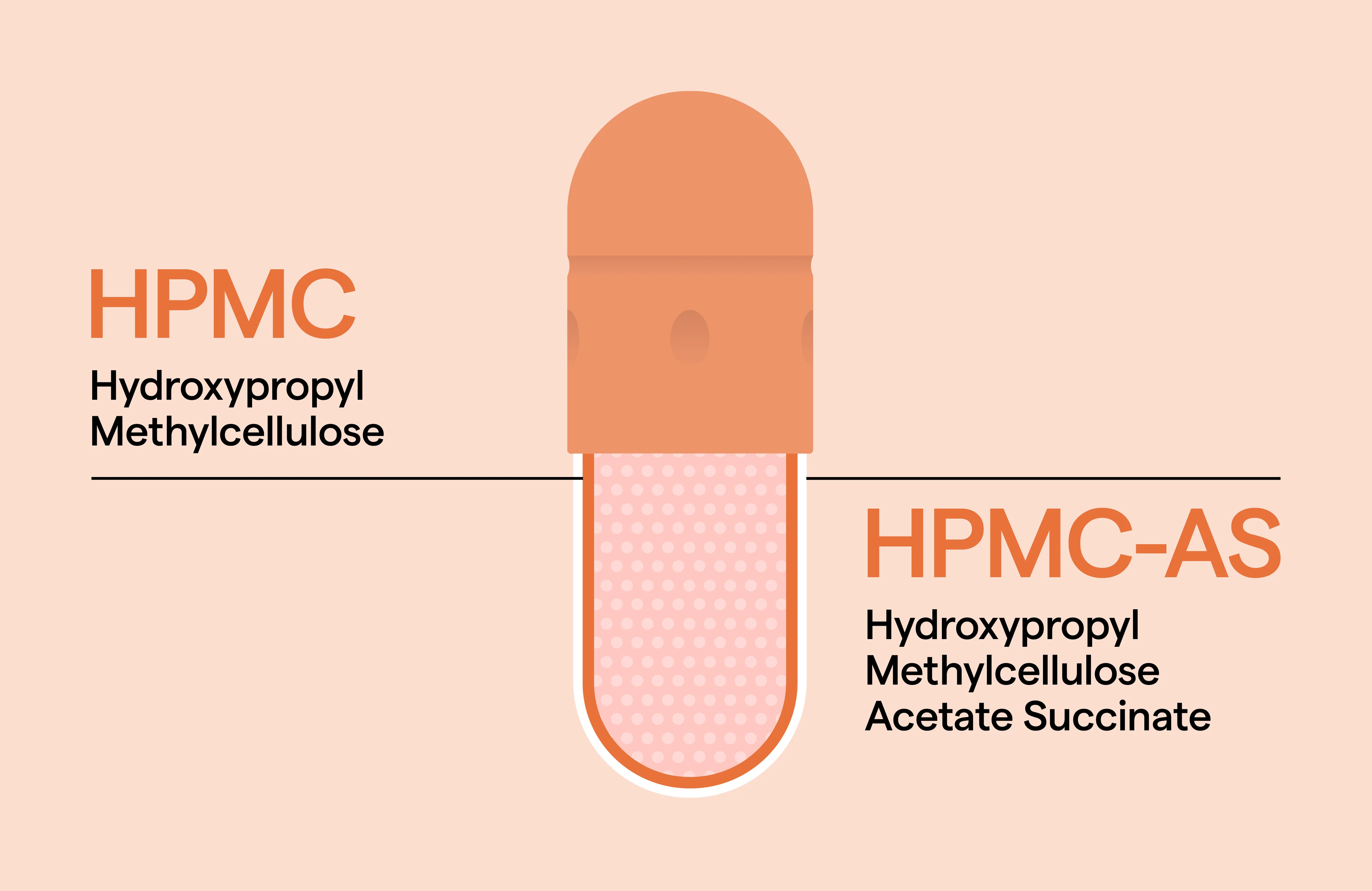
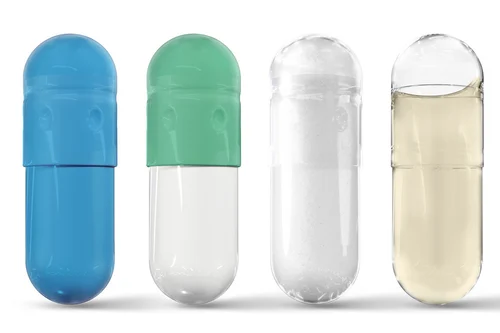
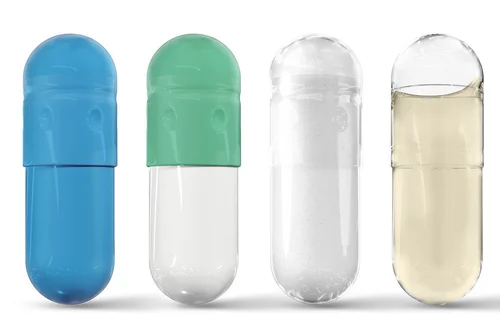
The unique architecture of Capsugel® Enprotect® capsules, comprising a specific inner and outer layer, allows for unprecedented versatility in capsule design, as well as for complex APIs, used in innovative therapies today, to be protected and delivered to the small intestine.
- Outer layer: Composed of hydroxypropyl methylcellulose acetate succinate (HPMC-AS), this layer provides enteric protection, dissolving only when the pH exceeds a certain threshold, typically ~6 and providing acid resistance for more than to 2 hours at pH levels as low as 1.2
- Inner layer: Composed of hydroxypropyl methylcellulose (HPMC) or other polymers, depending on formulation needs, this layer maintains structural integrity of the API and allows for the use of technologies, such as amorphous solid dispersions or lipid-based formulations, that might otherwise compromise a single-layer capsule
- Risk elimination and the manufacturing process: By eliminating the need for secondary coatings that previous manufacturing methods necessitated, the Capsugel® Enprotect® capsule also simplifies the path to market and removes the risks associated with the traditional enteric coating processes, such as heat and solvent interaction post-filling
Welcome to a new era for oral formulations: our time is now
The technological advancement embodied by Capsugel® Enprotect® capsules marks a pivotal progression in pharmaceutical capsule technology, combining cutting-edge polymer science with advanced manufacturing to expand the opportunities for enteric drug delivery today.12 But with ever-expanding treatment options, their delivery needs continual innovation; Lonza Capsugel is working to offer formulators with even more flexibility, precision, and potential for their medicines.
Lonza Capsugel developed a customized bilayer capsule to prevent the early disintegration often caused by shell hydration from permeation enhancers, like sodium caprate, or specific lipids, like glycerol monocaprylocaprate—substantially boosting the opportunities for innovative formulations by breaking down barriers to their design.
Lonza Capsugel introduced the ability to modulate the release site within the GI tract by varying the HPMC-AS polymer grade (Grades H and M) used in the capsule shell, backed by human MRI data. This allows formulators to target specific regions of the gut, bringing previously unobtainable levels of precision to oral administration: Grade H targets the distal intestine/ileum (dissolves at pH ≥6.8), while Grade M targets proximal regions like the jejunum (dissolving at pH 6.0).
To enhance patient compliance, a customized double-layer capsule featuring an outer layer of Opadry® EZ was developed to reduce oesophageal friction. This innovation addresses the static friction issues common with standard gelatin or HPMC capsules, potentially reducing the risk of oesophageal retention and improving patient experience.
Lonza Capsugel validated the stability of Capsugel® Enprotect® capsules stored at -80°C, offering a simplified alternative to the complex double encapsulation method currently used for FMT. This development enables a streamlined supply chain for FMT treatments by proving the capsules can withstand deep freezing without losing their enteric functionality.
What it all means
Today, many oral formulations previously deemed challenging or impossible to design are now potentially viable, ushering in a “new era” for oral formulations for medicines like biologics.6,8–11,23 By leveraging intrinsically enteric capsules, the industry might now broaden the appeal and accessibility of modern medicines for patients, healthcare professionals, and payers alike.
Imagining the possibilities for your innovative product? Click here.

About the interviewee
Dr HDR Vincent Jannin is the current Director of R&D and Head of Innovaform® Accelerator at Lonza Capsugel. With over two decades’ experience of leading pharmaceutical research programs, and previously a lecturer in formulation sciences at Lyon University, he holds a Pharm.D. (1999) and Ph.D. (2004) in pharmaceutical technologies from the University of Bourgogne, and an HDR (2010) from the University of Lyon, a prestigious qualification recognizing his expertise in advanced drug delivery systems.
A thought leader in oral lipid-based formulation and capsule innovation, Dr Jannin has a distinguished publication record, including 77 peer-reviewed journal articles (h-index=42, >6,000 citations), 6 patent families, and numerous book chapters and international presentations on Drug Delivery Systems.
REFERENCES
1. Park H, et al. Evolution of Drug Delivery Systems: From 1950 to 2020 and Beyond. J Control Release 2022;342: 53–65.
2. Katsnelson A. Profile: Abe Abuchowski. Nat Biotechnol 2006;24:1050–1050.
3. Park K. Controlled drug delivery systems: Past forward and future back. J Controlled Release 2014;190:3–8.
4. Taghi HS, et al. The Evolution of Drug Delivery Systems: Historical Advances and Future Directions. J Pharm Drug Dev 2025;3(1):13–32.
5. Padín-González E, et al. Understanding the Role and Impact of Poly (Ethylene Glycol) (PEG) on Nanoparticle Formulation: Implications for COVID-19 Vaccines. Front Bioeng Biotechnol 2022;10:882363.
6. Millet E, et al. Next generation capsules: emerging technologies in capsule fabrication and targeted oral drug delivery. Eur J Pharm Sci 2025; 214:107277.
7. Malaviya AN, et al. A fascinating story of the discovery & development of biologicals for use in clinical medicine. Indian J Med Res 2018;148:263–278.
8. Zeng H, et al. Oral Delivery Strategies for Biological Drugs. Small Methods 2025;9:2401355.
9. Palacios JI, et al. High-velocity delivery of biologics via the gastrointestinal tract by self-pressurized oral capsules. J Controlled Release 2025; 385: 113963.
10. Mantaj J, et al. Recent advances in the oral delivery of biologics. Pharm J. 2020. Available at: https://pharmaceutical-journal.com/article/research/recent-advances-in-the-oral-delivery-of-biologics. Accessed January 2026.
11. Fülöpová N, et al. Development and evaluation of innovative enteric-coated capsules for colon-specific delivery of hydrophilic biomaterials. Int J Pharm 2025;668:124991.
12. Capsugel® Enprotect® Scientific Brochure. Available at: https://translations.capsugel.com/knowledge-center/pharma/capsules/capsugel-enprotect-scientific-brochure. Accessed January 2026.
13. Philip AK, et al. Colon Targeted Drug Delivery Systems: A Review on Primary and Novel Approaches. Oman Med J 2010;25:79–87.
14. Raine T, et al. Maintaining Clinical Freedom Whilst Achieving Value in Biologics Prescribing: An Integrated Cross-Specialty Consensus of UK Dermatologists, Rheumatologists and Gastroenterologists. Biodrugs 2021;35:187–199.
15. Hawthorne J, et al. The current paradigm for biologic initiation: a confirmatory quantitative analysis of self-injection training practices. Expert Opin Drug Deliv 2022;19:733–742.
16. Fit for the future: 10 Year Health Plan for England. NHS. 2025. CP 1350.
17. Lau BD, et al. Budget impact analysis of conversion from intravenous to oral medication when clinically eligible for oral intake. Clin Ther 2011;33:1792–1796.
18. Ashiru-Oredope D, et al. Switching patients from IV to oral antimicrobials. Pharm. J. 2023. Available at: https://pharmaceutical-journal.com/article/ld/switching-patients-from-iv-to-oral-antimicrobials. Accessed January 2026.
19. Mughal A, et al. Impact on cost and disease outcome of switch fromintravenous to per-oral medication in the setting of a low-middle income country. JCIMCR 2025;6(9):3765.
20. Johnstone Y, et al. P91 Time to care: a comparative evaluation of IV versus oral antibiotic administration. JAC-Antimicrob Resist 2025;7:dlaf230.098.
21. Eii MN, et al. Sustainable practice: Prescribing oral over intravenous medications. BMJ 2023;383:e075297.
22. New R. Oral Delivery of Biologics via the Intestine. Pharmaceutics 2020;13(1):18 doi: 10.3390/pharmaceutics13010018.
23. Hashmi AR, et al. Advanced Drug Delivery Strategies to Overcome Solubility and Permeability Challenges: Driving Biopharmaceutical Advancements Toward Commercial Success. ACS Omega 2025;10:40769–40792.
24. Siew A. Formulation of Biologics for Non-Invasive Delivery. BioPharm International. 2025. Available at: https://www.biopharminternational.com/view/formulation-biologics-non-invasive-delivery. Accessed January 2026.
25. Grimm M, et al. In Vivo Evaluation of a Gastro-Resistant Enprotect® Capsule under Postprandial Conditions. Pharmaceutics 2023;15(11):2576. doi:10.3390/pharmaceutics15112576.
26. Capsugel® Enprotect® ‘FAQ’ Article Series: Different Applications. Available at: https://translations.capsugel.com/knowledge-center/pharma/capsules/enprotect-FAQ-different-applications. Accessed January 2026.
27. Jannin V. Capsugel® Enprotect® Capsules: Precision Enteric Delivery Through Science and Customization. CRS 2025 Annual Meeting & Exposition, Philadelphia, PA. Presentation 2025, July 17.
28. Dumont C, et al. Improving oral bioavailability of therapeutic peptides with lipid-based formulations and ready-to-use customized enteric capsules. AAPS. 2025. Poster M1230-06-38.
29. Jannin V, et al. Lipid Formulations in Customized Enteric Capsules Show Promising Results For Oral GLP-1 RA Delivery. CRS 2025 Annual Meeting & Exposition, Philadelphia, PA. Presentation 2025, July 13–18.
30. Grimm M, et al. The influence of different HPMCAS grades for preparation of enteric capsules investigated by MRI in human volunteers. AAPS. 2025. Poster T1430-07-42.
31. Nombret D, et al. Enhancing capsule swallowability via double-layer design for superior glide in wet conditions. AAPS. 2025. Poster M1030-08-05.
32. Jannin V, et al. Enteric properties of Capsugel® Enprotect® capsules filled with Fecal Microbiota Transplant are confirmed after 12-month storage at -80°C. Poster European Conference of Pharmaceutics. 2025.