Compounding pharmacies play a critical role in delivering personalized medicines when commercially available products cannot meet individual patient needs. Demand for customized therapies—particularly in areas such as hormone replacement therapy (HRT), pediatrics, geriatrics, and nutraceuticals—continues to grow, placing increasing pressure on pharmacies to deliver accurate, stable, and patient-friendly dosage forms.
Traditional compounding approaches, however, often struggle to keep pace with these expectations. In response, many compounding pharmacies are adopting in-house liquid-filled hard capsule (LFHC) filling and sealing solutions to enhance formulation flexibility, improve quality, and strengthen compliance.
Explore advanced capsule filling and sealing solutions.
Limitations of Conventional Compounding Methods
Manual compounding techniques remain widely used but present well-documented challenges:
- Powder encapsulation can result in content variability, especially for low-dose or high-potency APIs.
- Tablet splitting or crushing introduces dosing inaccuracies and stability risks, particularly for narrow therapeutic index medications.
- Liquid dosing into unsealed capsules increases the risk of leakage, oxidation, and cross-contamination.
The U.S. National Academies have emphasized that compounded medicines often lack the standardized process controls of commercial products, making procedural consistency and validated workflows essential for patient safety (National Academies of Sciences, Engineering, and Medicine, 2020).
Why Liquid-Filled Hard Capsules Are Well Suited for Compounding Pharmacies
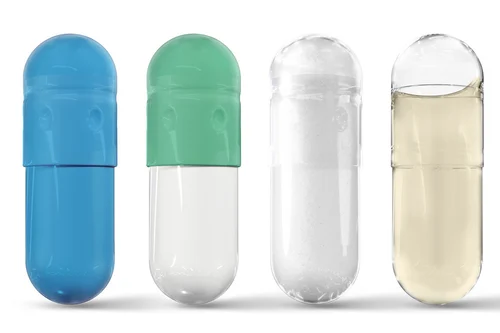
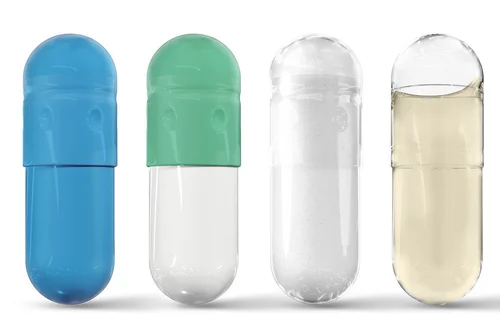
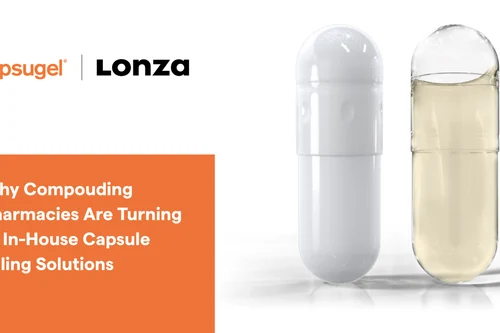
Liquid-filled hard capsules provide compounding pharmacies with a robust and flexible dosage form that aligns well with patient-specific preparation. By incorporating APIs into liquid or semi-solid matrices, LFHCs allow pharmacies to:
- Adjust doses precisely by modifying fill volume or concentration
- Improve solubility and bioavailability for poorly water-soluble compounds
- Mask unpleasant taste and odor without additional coatings
- Reduce variability associated with powder flow and segregation
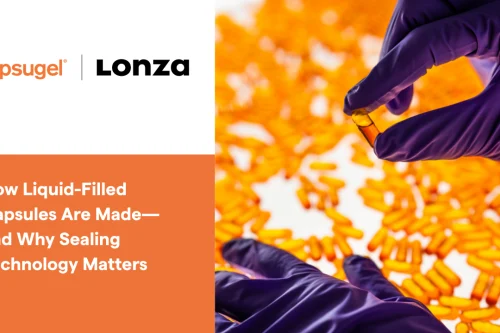
When combined with validated sealing technologies, LFHCs also deliver leak resistance, tamper evidence, and enhanced stability, supporting both quality and patient confidence (Woo et al., 2023).
Key Compounding Applications Driving Adoption
• Hormone Repalcement Therapy (HRT)
HRT is one of the most common applications for compounded medicines, as patients often require customized doses of estrogen, progesterone, testosterone, or combination therapies. These hormones are frequently dose-sensitive and oxidation-prone, making formulation and handling critical.
Liquid-filled capsules enable accurate, repeatable dosing while fusion sealing and optional nitrogen purging protect hormone APIs from oxygen exposure, helping preserve potency throughout the beyond-use period (Waterman & Adami, 2005).
• Nutraceuticals and Specialty Oils
Compounded nutraceuticals, probiotics, and lipid-based supplements are highly sensitive to moisture, oxygen, and gastric conditions. Plant-based capsule shells such as HPMC, combined with fusion sealing, provide an effective barrier without relying on softgels or enteric coatings. This approach supports improved stability while maintaining flexibility for small-batch compounding.
• High-Potency and Low-Dose APIs
Handling potent APIs in powder form increases occupational exposure risks for pharmacy staff. Liquid filling significantly reduces airborne particulates and manual manipulation. Sealed capsules provide a closed, tamper-evident dosage form that enhances operator safety and minimizes cross-contamination—key considerations in non-sterile compounding environments (National Academies of Sciences, Engineering, and Medicine, 2020).
Quality, Safety, and Regulatory Considerations
Compounding pharmacies operate within a demanding regulatory framework that emphasizes accuracy, consistency, and contamination control. Manual processes increase the likelihood of human error, while automated liquid capsule filling and sealing systems reduce operator dependency and improve reproducibility.
Fusion sealing, in particular, supports:
- Leak-resistant, tamper-evident capsules
- Improved protection against moisture and oxygen ingress
- Consistent capsule integrity throughout handling and storage
These attributes align with the principles of USP <795> for non-sterile compounding by supporting controlled processes and reducing variability (National Academies of Sciences, Engineering, and Medicine, 2020).
Enabling In-House Capability with Bench-Top Systems
Modern bench-top liquid capsule filling systems integrate precision dosing, fusion sealing, and optional nitrogen purging into a compact footprint suitable for compounding pharmacies. Capsugel Lonza offers two bench-top solutions : the CFS 1200® machine for small- to medium-scale production and the CFS 1500® machine for higher throughput needs; both designed to support controlled, patient-specific compounding workflows.
By bringing liquid capsule filling in-house with these technologies, compounding pharmacies can:
- Produce small, patient-specific batches efficiently
- Reduce reliance on outsourced manufacturing
- Shorten turnaround times for customized prescriptions
- Maintain greater control over formulation quality
- Expand their therapeutic offerings while maintaining high standards of quality and safety.
Conclusion
As personalized medicine becomes increasingly central to pharmacy practice, compounding pharmacies need dosage forms that combine flexibility, stability, and patient-centric design. In-house liquid-filled hard capsule filling offers a scientifically sound solution that addresses the limitations of traditional compounding methods.
Through precise liquid dosing and validated sealing technologies, LFHCs enable compounding pharmacies to deliver customized therapies with confidence—supporting patient safety, regulatory expectations, and evolving clinical needs.
In our next article, we will explore the history of hormone replacement therapy (HRT), its clinical uses and how compounding pharmacies are using advanced liquid-filled hard capsules to deliver personalized treatments safely and effectively: Hormone Replacement Therapy: History, Applications, and Compounding Innovations
References:
- National Academies of Sciences, Engineering, and Medicine. (2020). Compounded medications: Reviewing safety and effectiveness. Washington, DC: National Academies Press. https://doi.org/10.17226/25791
- Waterman, K. C., & Adami, R. C. (2005). Accelerated aging: Prediction of chemical stability of pharmaceuticals. International Journal of Pharmaceutics, 293(1–2), 101–125.
- Woo, S.-W., Hwang, S.-J., & Cho, C.-W. (2023). Liquid-filled hard capsule formulation of choline alfoscerate: In vitro/in vivo evaluation and bioequivalence to softgels. Journal of Pharmaceutical Investigation, 53(4), 517–526.Transparency Market Research. (2025, February 24). Compounding Pharmacy Market Size to Reach US$ 26,838.8 Mn by 2034.